Marine on St. Croix sits directly on the banks of the St. Croix River, inside the federally protected St. Croix National Scenic Riverway. That location is part of what makes the town beautiful, and it is also why flood damage restoration Marine on Saint Croix MN homeowners search for is not a rare need. When the river rises above its banks, low-lying streets, riverside yards, and older homes near Marine Landing take on water quickly, and the cleanup that follows has to be handled correctly the first time.
This guide explains how river flooding affects homes in Marine on St. Croix, what a proper flood damage restoration process actually involves, and what to check before hiring anyone to do the work.
Why Marine on St. Croix Needs Specialized Flood Damage Restoration
Marine on St. Croix is a small riverside community in Washington County, built along a stretch of the St. Croix where the U.S. Geological Survey maintains a stream gage to track water levels in real time. That gage exists because the river here is known to rise fast during spring snowmelt and after heavy regional rainfall, sending water into Marine Landing, nearby parks, and the low streets that sit closest to the riverbank. Homeowners wanting to understand flood risk patterns and preparedness steps for Minnesota can also check the Minnesota DNR’s flood resources page for official guidance.
Homes built decades ago, before modern floodproofing standards, often sit at an elevation that puts basements and crawl spaces directly in the path of rising groundwater, even when the river itself does not reach the house. This is different from a plumbing leak or an appliance failure. River flooding usually brings in silt, debris, and untreated surface water, which changes how the cleanup needs to be handled from the very first step.
What Flood Damage Restoration in Marine on St. Croix Actually Involves
A proper flood damage restoration Marine on Saint Croix MN project follows a specific order, and skipping steps is where most homeowners run into trouble later. Every flood damage restoration job in this part of the St. Croix Valley starts the same way, regardless of how much water came in.
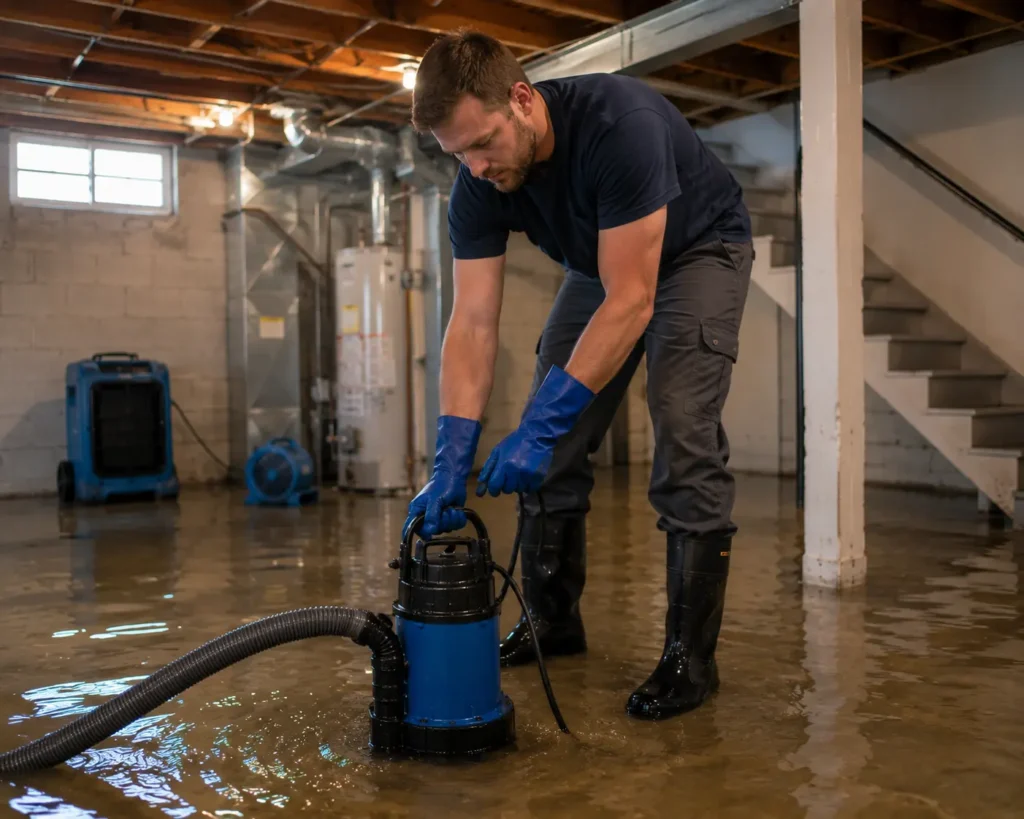
Water extraction comes first. Standing water needs to be pumped or vacuumed out before any other work begins, because every additional hour it sits increases how far it travels into flooring, drywall, and framing.
Moisture inspection follows extraction. Floodwater rarely stays where you can see it. Technicians check behind walls, under flooring, and inside insulation using moisture meters, since river water tends to wick upward well past the visible waterline.
Structural drying is the longest phase. Air movers and dehumidifiers run for several days to bring wood framing, subflooring, and drywall back down to a safe moisture level. This step cannot be rushed, because trapped moisture behind a freshly painted wall is exactly how hidden mold problems start months later.
Cleaning and disinfecting affected surfaces matters more with river floodwater than with a clean water leak, since river water can carry contaminants picked up upstream.
Repair and rebuild is the final stage, where damaged drywall, insulation, and flooring are replaced once every part of the structure has dried to a safe level.
For homes where flooding has reached crawl spaces or basement framing, this process pairs directly with structural drying services, since the drying phase is what determines whether a home avoids long-term moisture and mold issues.
What to Ask Before Hiring a Flood Restoration Company
Not every contractor treats river floodwater the same way as a clean water leak, and that distinction matters for your safety and your insurance claim. Before hiring anyone for flood damage restoration Marine on Saint Croix MN, ask:
- How quickly can you start extraction once you’re on site?
- Will you document moisture levels throughout the drying process?
- Do you separate river floodwater cleanup from standard water damage cleanup in your process?
- What happens if drywall or subflooring tests wet again after the initial drying phase?
A contractor who cannot answer these clearly is one to keep looking past. Our flood damage restoration team applies the same structured process in Marine on St. Croix that we use anywhere else we’re called, because the steps that prevent hidden mold and structural damage do not change by zip code.
Flood Damage Restoration Marine on Saint Croix MN vs. Other Climates
Flood damage restoration Marine on Saint Croix MN work follows the same core principles used everywhere else, but the timing looks different depending on climate. In the Pacific Northwest, where our team is based in Yelm, WA, flooding tends to build gradually from sustained winter rain and saturated ground rather than a single fast-rising river event. In Minnesota’s St. Croix Valley, flooding is more tied to spring snowmelt and short, intense rain events that push the river up quickly. The drying and rebuild process is nearly identical either way, but homeowners here often have less warning time than a slow seasonal soak gives elsewhere, which is exactly why fast extraction matters so much once water is inside a home.
If flooding has affected areas with contaminated water, our sewage backup cleanup service handles that separately from standard flood cleanup, since the safety protocols differ. And if the same event has left any lingering musty smell after drying, our mold remediation team is worth a call before it becomes a bigger problem.
When to Call for Flood Damage Restoration
If your home in Marine on St. Croix has taken on water from a rising river, do not wait to see how much dries out on its own. Contaminated water and hidden moisture both get harder to deal with the longer they sit. You can learn more about how we approach this work on our about us page, or reach out directly through our contact page to talk through what you’re dealing with.
Flood damage restoration Marine on Saint Croix MN work is not something to handle piecemeal. Getting extraction, drying, and cleaning done in the right order is what protects the structure long after the river has gone back down.
FAQs
Does homeowners insurance cover flood damage from the St. Croix River?
Standard homeowners insurance typically does not cover flooding caused by a rising river or overland water. That type of damage usually requires separate flood insurance through the National Flood Insurance Program. Check your specific policy or talk with your agent to confirm what is and isn’t covered.
How long does flood damage restoration usually take?
Extraction can often be completed within the first day, but structural drying is the longest phase and can take several days depending on how much moisture the home absorbed and how it’s constructed. Rushing repairs before drying is complete is one of the most common mistakes homeowners make.
What’s the difference between flood water and a regular water leak?
Floodwater from a river or heavy surface runoff is generally treated as more contaminated than a clean water leak from a pipe or appliance, since it can carry silt, debris, and bacteria picked up as it travels. That changes how the cleanup and disinfecting steps are handled.
Can I stay in my home during flood damage restoration?
It depends on how much of the home was affected and whether contaminated water was involved. A restoration technician can assess the affected areas and let you know whether it’s safe to remain in unaffected parts of the home during drying.
Will flood damage lead to mold if it’s not dried properly?
Yes. Moisture trapped behind walls or under flooring after a flood is one of the most common causes of hidden mold growth, often appearing weeks or months after the visible cleanup is done. That’s why the structural drying phase matters as much as the initial extraction.
Final Thoughts
Flood damage restoration Marine on Saint Croix MN is not something that benefits from a slow, piecemeal approach. The order matters – extraction, moisture inspection, structural drying, disinfecting, and rebuild each depend on the step before it being done right. Skip or rush any one of them, and you’re often looking at a second problem months later in the form of hidden mold or a structure that never fully dried.
If your home in Marine on St. Croix has taken on river water, call our team on (360) 837-5163 for immediate 24/7 service – we’ll walk you through what needs to happen first and get the right process started before more damage sets in.
Leave a Reply