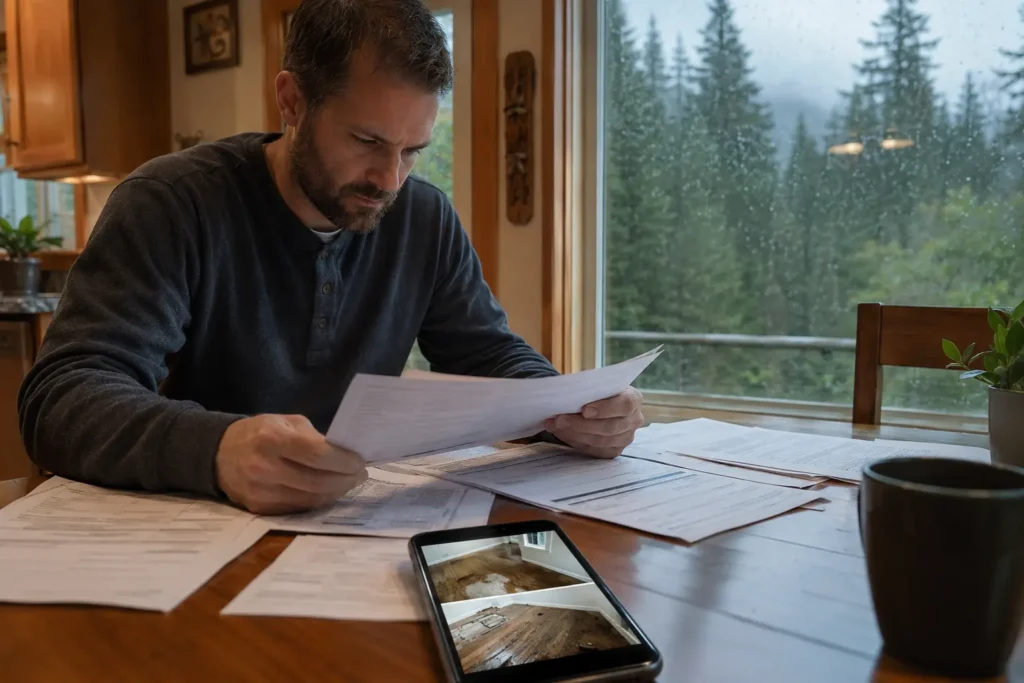
Filing a water damage insurance claim sounds straightforward until you’re actually doing it. You’ve got a flooded basement, soaked drywall, and a restoration crew asking when they can start and somewhere in the middle of all that, you’re supposed to navigate a claims process that most homeowners have never dealt with before.
Water damage insurance claims in the Pacific Northwest come with a few specific wrinkles that catch people off guard. The region’s rainfall patterns, the types of flooding that commonly affect homes here, and the way policies are written for this climate all combine to create situations where well-meaning homeowners make mistakes that cost them thousands.
This guide covers the most common ones and what to do instead.
Your Policy Probably Doesn’t Cover What You Think It Does
This is the one that surprises people most. A standard homeowners insurance policy in Washington State covers sudden and accidental water damage – a burst pipe, an appliance failure, a roof leak from storm damage. What it typically does not cover is flooding from outside the home.
In the Pacific Northwest, that distinction matters enormously. Heavy rainfall that overwhelms a drainage system and pushes water into your basement through the foundation? Usually not covered under standard homeowners insurance. River overflow affecting low-lying properties near the Nisqually River in the Yelm area? Also typically excluded.
Flood damage from external water sources requires a separate flood insurance policy, usually through the National Flood Insurance Program. Many homeowners in Yelm and surrounding areas discover this gap only after a significant rain event – and by then it’s too late to add coverage.
A few policy distinctions worth knowing before you ever file a claim:
- Sudden vs. gradual damage – a pipe that bursts overnight is covered; a slow leak behind a wall that caused damage over months is often denied as a maintenance issue
- Sewer and drain backup – this is usually a separate rider, not automatic coverage, and Pacific Northwest homes with older drainage systems are vulnerable
- Mold resulting from water damage – some policies cover mold remediation as part of a covered water claim; others cap it at a low dollar amount or exclude it entirely
The Documentation Mistake That Kills Claims
The single most common reason water damage claims get underpaid or denied isn’t the policy language – it’s documentation. Specifically, the lack of it.
When water damage happens, the natural instinct is to start cleaning up immediately. Move the wet furniture, pull up the carpet, get fans running. The problem is that once you’ve done that, the evidence of the original damage extent is gone. Insurance adjusters work from what they can see, and what they can measure. If the damage has already been partially cleaned up before they arrive, the assessment almost always comes in lower than the actual loss.
The emergency water removal process should only begin after thorough documentation is complete. That means:
- Video walkthrough first – walk every affected room and record everything before touching anything
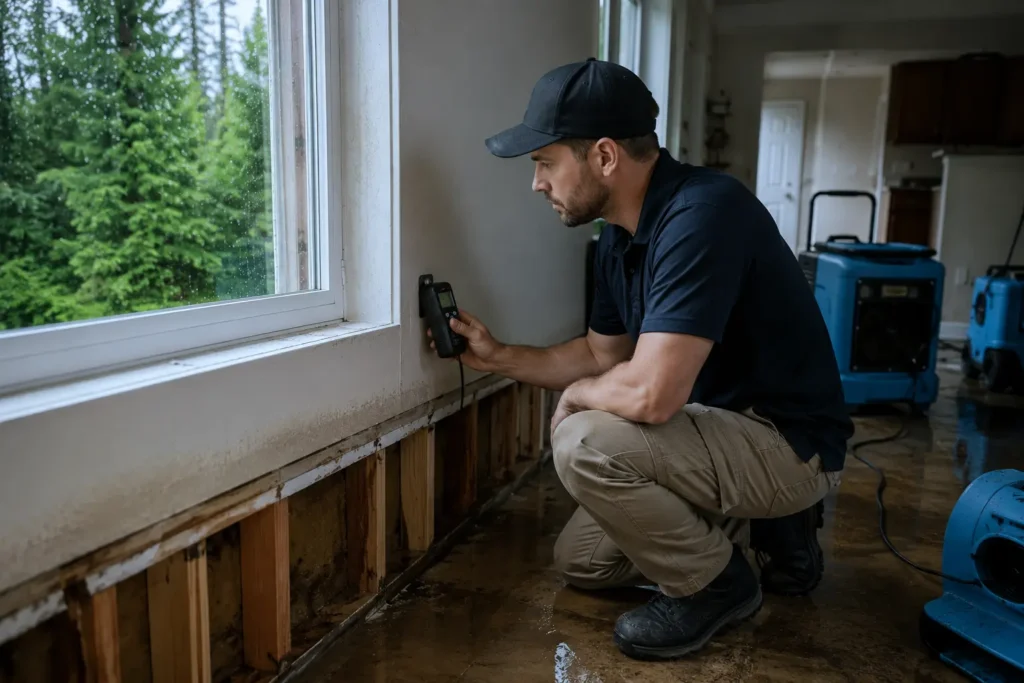
- Moisture readings – a professional crew can document moisture levels in walls, floors, and ceilings before extraction begins. These numbers matter to adjusters
- Photos of the water source – whether it’s a burst pipe, a failed water heater, or roof damage, photograph it exactly as found
- Preserve damaged materials – don’t throw away wet carpet, flooring samples, or damaged belongings until the adjuster has seen them or you’ve documented them thoroughly
Calling Your Insurer Too Late – Or Too Early
Timing matters more than most people realize when it comes to water damage claims in the Pacific Northwest.
Calling too late is the obvious problem, policies require prompt notice of a loss, and waiting days before reporting can give insurers grounds to question whether the damage worsened due to inaction. Most policies require notification within a reasonable timeframe, and in Washington State that’s generally interpreted as as soon as practically possible.
Calling too early has a different problem. If you report a claim before you understand the full scope of the damage, you may end up settling for an amount that doesn’t cover everything. Water damage in Pacific Northwest homes often has a hidden component, moisture that traveled behind walls, into subfloor cavities, or under tile – that doesn’t show up until a proper water damage assessment has been completed.
The right approach is to call your insurer to report the loss promptly, but make clear that the full scope of damage is still being assessed. Don’t agree to a settlement figure until a restoration professional has completed moisture mapping.
What Coastal Homeowners Face That’s Different
Pacific Northwest claims are complicated by rainfall and drainage issues. Coastal Southeast homeowners deal with a different set of challenges entirely – storm surge, tidal flooding, and the contamination classification that comes with water entering a home from outside during a hurricane or named storm.
In Charleston, SC, for example, water damage insurance claims often involve Category 2 or Category 3 contaminated water from coastal flooding, which changes both the remediation requirements and the documentation needed for the claim. A water damage restoration company in Charleston SC working on a post-hurricane claim needs to document not just moisture levels, but water source classification and antimicrobial treatment protocols, because insurers in coastal flood zones require that level of detail.
The underlying lesson applies everywhere, whether you’re in Yelm or Charleston, the more thoroughly you document the source, the category, and the extent of the damage before cleanup begins, the stronger your claim.
Working With Your Restoration Crew and Adjuster Together
One thing that speeds up Pacific Northwest water damage claims significantly is having your restoration company and insurance adjuster in direct communication early. Many homeowners keep these two conversations separate – talking to the restoration crew about the work, and talking to the adjuster about the money. That separation often creates gaps.
A restoration crew that understands how water damage spreads through Pacific Northwest home construction can explain to an adjuster exactly why certain materials need to come out, why drying timelines are longer in high-humidity conditions, and why secondary damage like mold is a realistic risk if remediation isn’t completed properly. That kind of technical documentation, presented directly to the adjuster, results in more complete settlements.
Ask your restoration company upfront whether they handle insurance communication as part of their process. Most established companies in the Yelm area do and it’s worth confirming before work begins rather than trying to bridge that gap after the fact.
The Takeaway
Water damage insurance claims in the Pacific Northwest go wrong for a handful of consistent reasons – policy misunderstandings, documentation gaps, and timing mistakes that are all completely avoidable with the right approach. Know what your policy actually covers before an emergency happens. Document everything before cleanup starts. Let your restoration crew and adjuster communicate directly. And don’t settle until the full scope of damage, including anything hidden behind walls or under floors, has been properly assessed.
If you’re dealing with water damage in the Yelm area right now, call (360) 837-5163 – available 24/7 for immediate assessment and insurance documentation support.
Leave a Reply