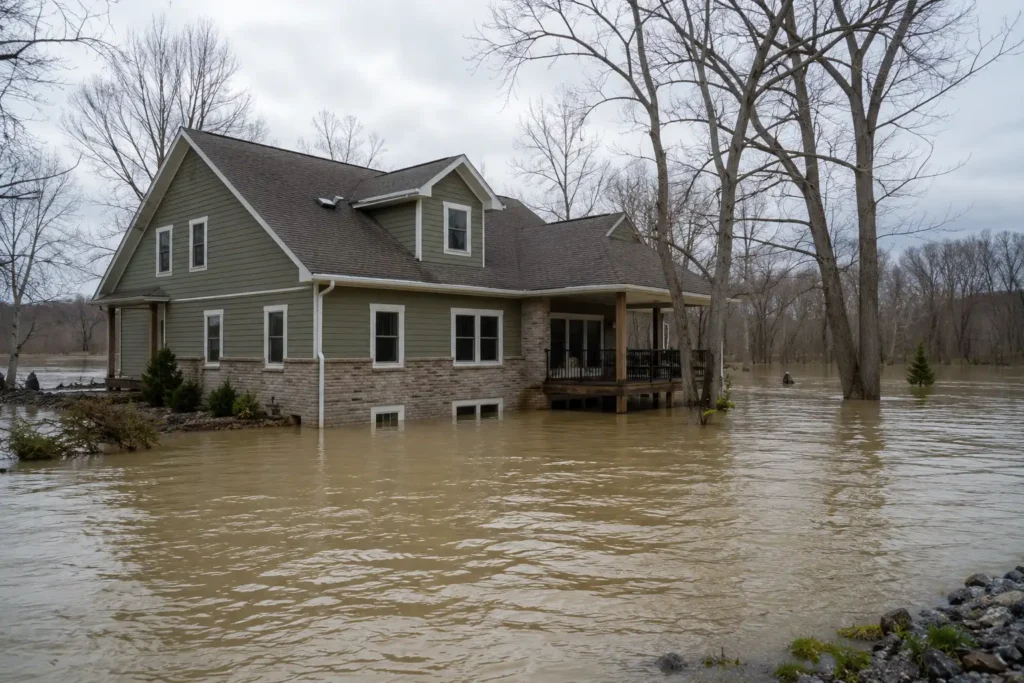
River flooding home damage follows the same basic pattern regardless of where you live – water enters, materials absorb it, and the clock starts on mold and structural damage. But the way river flooding behaves, what it carries with it, how fast it rises, and what it does to your foundation differs significantly depending on which river you’re dealing with and what region you’re in.
This post compares two very different river flooding scenarios, the Nisqually River in Yelm WA and the Illinois River in Peoria IL, to help homeowners in both regions understand what makes river flood damage more complicated than standard water damage, and why the restoration approach needs to account for those differences.
Why River Flooding Is a Different Category of Water Damage
Not all flooding is equal. A burst pipe inside your home is clean water, contained, and usually caught quickly. River flooding is an entirely different situation for three reasons.
First, river water is category 3 water – the most contaminated classification in water damage restoration. It carries sediment, bacteria, agricultural runoff, sewage overflow from municipal systems that get overwhelmed, and in some cases industrial contaminants depending on what’s upstream. Any material this water contacts is considered contaminated, not just wet.
Second, river flooding tends to rise slowly enough that homeowners think they have time, then move faster than expected when the volume peaks. That gap between “I’ll start moving things” and “water is already at the baseboards” is where most of the preventable damage happens.
Third, river flooding typically affects the entire lower level of a home at once, not just one area. The scope of damage is almost always larger than any other single water event a homeowner will face.
Nisqually River Flooding – What Yelm Homeowners Face
The Nisqually River runs through Thurston County and directly influences flooding risk for homes in Yelm and surrounding communities like McKenna and Rainier. The Nisqually is fed by glacial melt from Mount Rainier, which means flooding events are tied to both heavy Pacific Northwest rainfall and temperature-driven snowmelt from elevation.
What makes Nisqually River flooding particularly damaging for Yelm homes:
- Glacial sediment content – Runoff from Mount Rainier carries fine glacial sediment that settles into porous materials, concrete, framing, and subfloor, making cleanup significantly more involved than clear water extraction
- Combined rain and melt events – When atmospheric river systems hit during warm spells, both heavy rain and snowmelt happen simultaneously, creating surge volumes that overwhelm drainage systems faster than homes can be protected
- High ambient humidity – Pacific Northwest baseline humidity means wet materials dry slower after a flood event, extending the window during which mold can establish itself
After a Nisqually River flooding event, mold remediation experts are almost always part of the restoration scope, not because of negligence, but because the combination of contaminated water and slow drying conditions makes mold growth nearly inevitable without professional intervention.
Illinois River Flooding – What Peoria Homeowners Deal With
The Illinois River runs directly through Peoria, making it one of the most flood-exposed mid-sized cities in the Midwest. Spring flooding season typically runs from March through June, when a combination of upstream snowmelt across central Illinois and heavy spring rainfall pushes the river above flood stage on a near-annual basis.
For homeowners dealing with water damage Peoria IL situations caused by Illinois River flooding, the conditions are different from Yelm but the contamination category is the same:
- Agricultural runoff – The Illinois River drains a heavily farmed watershed. Floodwater carries fertilizer runoff, pesticide residue, and soil from upstream fields, all of which contaminate any porous material they contact
- Older housing stock – Many Peoria neighborhoods near the river were built decades ago with block foundations that absorb water readily. Once water enters these foundations, extraction and drying is more involved than in newer poured-concrete construction
- Rapid water table rise – Even homes not directly adjacent to the river experience groundwater intrusion during flood events, as the rising river pushes the water table up across a wide area
The Contamination Factor – Why River Flood Cleanup Is More Involved
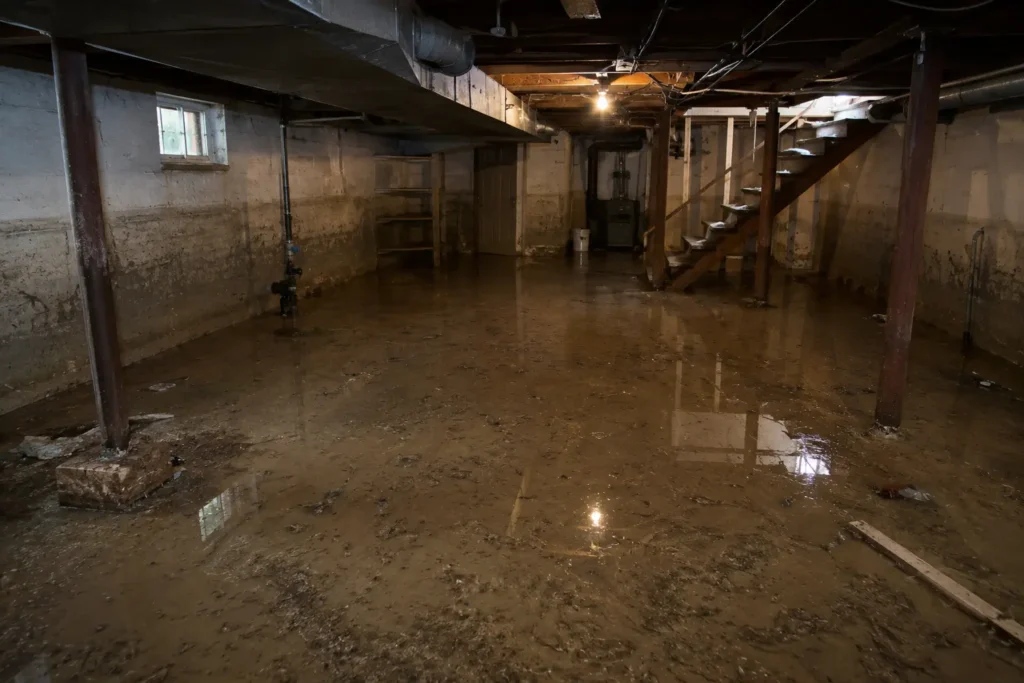
This is the biggest difference between river flooding and standard water damage. Category 3 water contamination means restoration teams can’t just dry materials in place – contaminated porous materials need to be removed entirely.
For a standard pipe burst, a restoration team dries drywall in place if moisture readings allow. For river flooding, that same drywall gets removed regardless of moisture level, because the contamination risk from category 3 water makes it unsafe to leave in place.
This single factor is what drives river flood restoration costs significantly higher than equivalent jobs from clean water sources. Material removal, proper disposal, decontamination of structural framing, antimicrobial treatment, and often sewage backup cleanup protocols all get added to the scope when river water is involved.
According to the EPA’s guidelines on flood cleanup and contaminated water, any materials contacted by floodwater from external sources should be treated as contaminated and handled accordingly, regardless of how the water looks on the surface.
Sediment Damage – The Problem That Persists After the Water Is Gone
Both Nisqually River and Illinois River flooding events leave sediment behind. This is one of the most underestimated parts of river flood damage because it’s not visible the same way standing water is.
Fine sediment settles into concrete pores, gets packed into wall cavities, coats HVAC systems, and works its way into subfloor material. Once it dries, it hardens and becomes significantly more difficult to remove. It also carries the same contamination load as the floodwater itself, meaning it can’t simply be swept up and left in the space.
After sediment removal, affected areas often develop persistent odors from bacterial activity in residual organic matter left behind by the sediment. This is where odor elimination services become part of the restoration process, treating the source of the odor rather than masking it.
What to Do Immediately After River Flooding – Both Regions
Regardless of whether you’re in Yelm WA or Peoria IL, the immediate steps after river flooding are the same:
- Do not enter a flooded space until power has been confirmed off – river flooding often reaches electrical outlets and panel boxes
- Document everything with photos and video before any cleanup begins – insurance adjusters need pre-cleanup documentation
- Do not attempt to dry river floodwater with household equipment – category 3 contamination requires professional extraction and disposal protocols
- Contact your insurance company before moving or discarding anything – premature removal can complicate claims
If the flooding involved attic intrusion from roof damage during a storm event alongside the river surge, attic water damage repair needs to be assessed separately from the ground level flooding scope, as the two damage paths require different approaches.
Final Thought – River Flooding Needs a Different Restoration Approach
Standard water damage restoration protocols are built around clean water events. River flooding doesn’t fit that model. The contamination level, the sediment load, the scope of material removal, and the extended drying timelines in humid climates like Yelm WA or during spring flooding season in Peoria IL all require a restoration approach that accounts for what river water actually carries.
If you’ve experienced river flooding in the Yelm area or surrounding Thurston County communities, call (360) 837-5163 – our team handles category 3 water events with the right protocols from extraction through final decontamination, 24 hours a day.
Leave a Reply